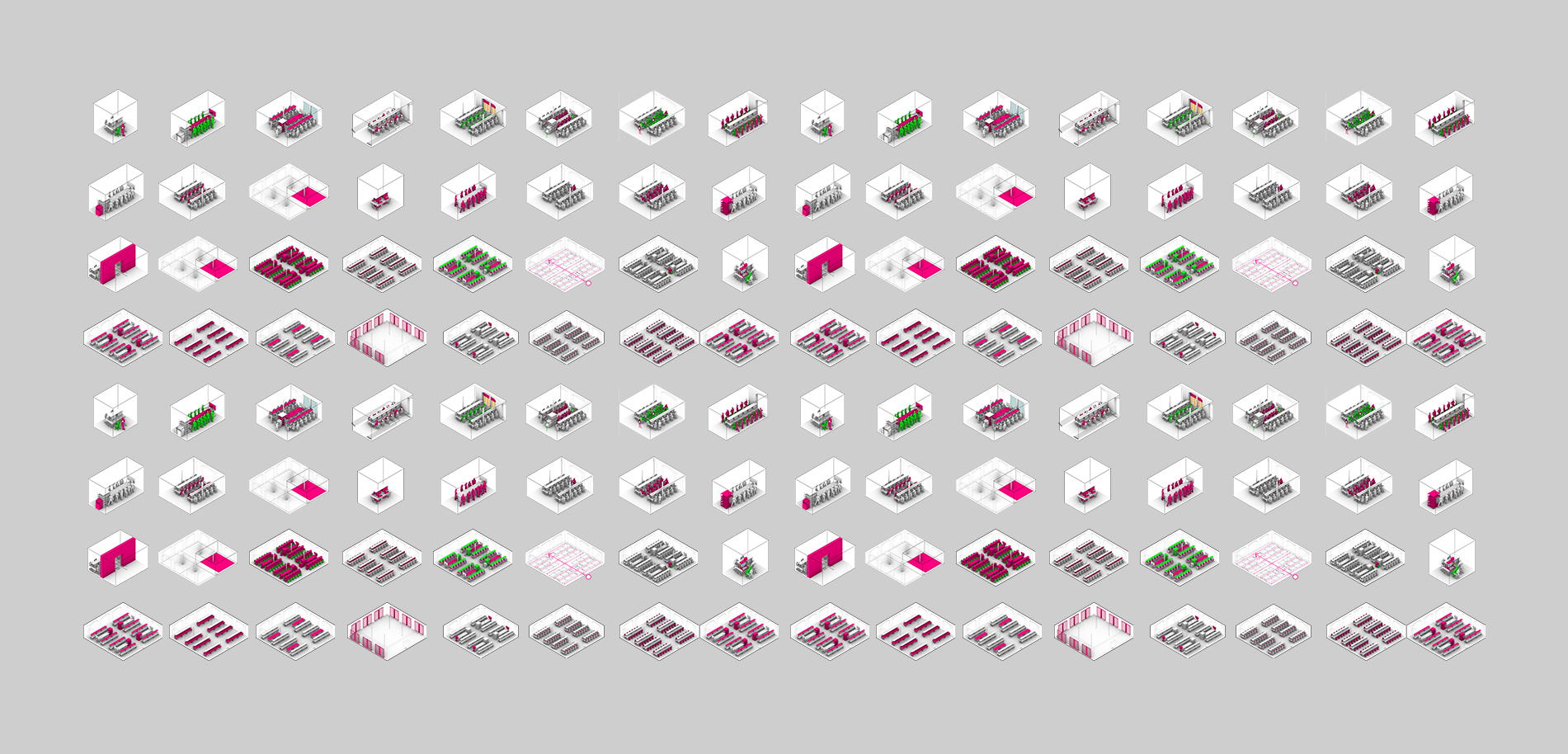
Studio-In-Flux
This project investigates the potential of 3D and physical AI to facilitate insights, decisions, and predictions for problems involving higher-level spatial reasoning.
By leveraging open source AI models, we developed a chain-of-inference system that can analyze spatial patterns, simulate agent behaviour, and recommend optimized spatial configurations.
By leveraging open source AI models, we developed a chain-of-inference system that can analyze spatial patterns, simulate agent behaviour, and recommend optimized spatial configurations.